Windshield protection film
The same idea as PPF on a hood, applied to the one piece of glass that takes every stone the road throws. An optically clear layer bonds over your factory windshield and spreads the energy of a strike sideways, instead of letting it concentrate on a single point.
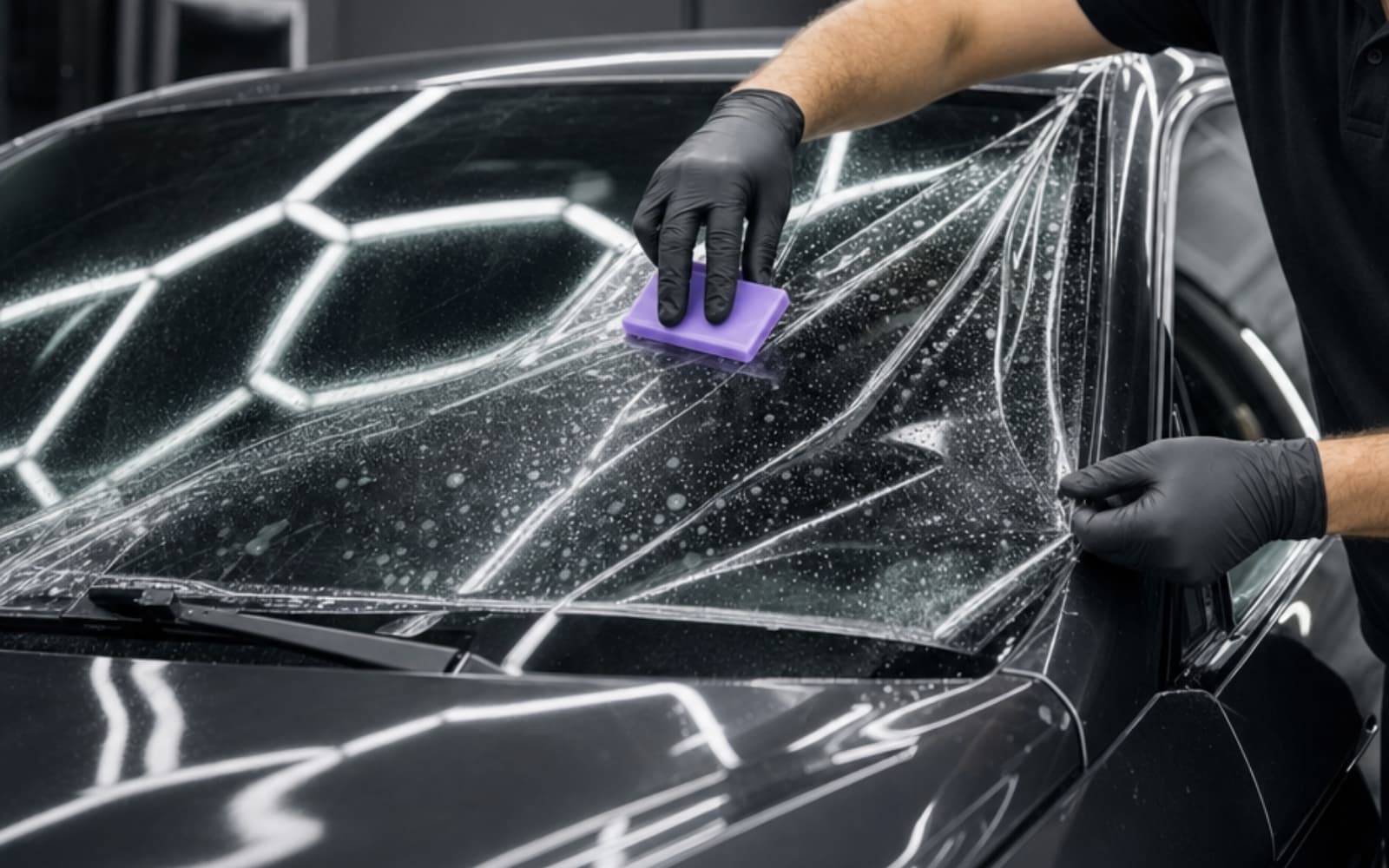
Why film, rather than new glass.
A windshield used to be a piece of laminated glass. On most vehicles built in the last decade it is also the mounting point for the forward camera behind the mirror — the one running lane keeping, adaptive cruise and automatic braking. Replacing one means new glass, refitting that camera and recalibrating the system it feeds, and that is before the deductible.
Film changes what takes the damage. It has real thickness, so when a stone comes off a truck the film deforms and spreads that energy sideways. A strike that would have left a star gets absorbed by a layer you can replace for a fraction of the glass beneath it.
A sacrificial layer
The film is meant to be used up. Replacing it costs a fraction of the glass beneath it, as often as the road requires.
Keeps your factory glass
Original glass means original optics and original camera calibration, neither of which survives a replacement untouched.
Invisible in use
Optically clear, self-healing under heat, and compatible with wipers, rain sensors, heating elements and head-up displays.
The package
One tier, priced the same here as on the Brakeout Auto hub. Most vehicles are done in a day, and the film is replaced on its own when it has taken enough — the glass underneath stays factory.
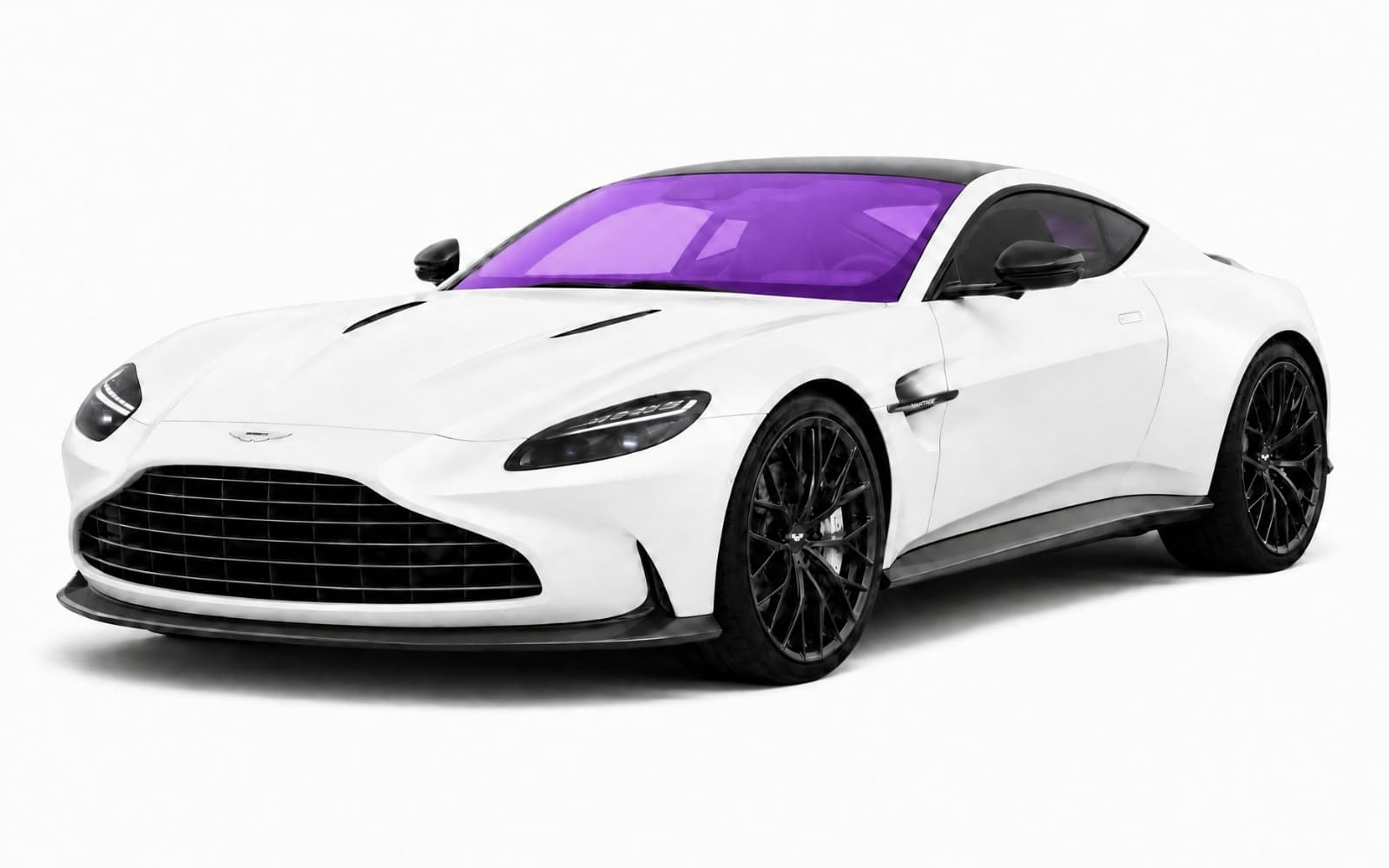
Windshield Protection Film
Starting at $600
- Optically clear film over the full windshield
- Absorbs rock strikes before they chip the glass
- Removable and replaceable on its own
- Self-healing film, up to 10 year warranty
How we install it.
The result depends almost entirely on what is under the film, so most of the work happens before any of it goes on. Every install is done by hand in our climate-controlled State College bay.
Glass Inspection
We check the windshield for existing chips and pitting first. Film goes over sound glass, and anything already damaged is better addressed before it is sealed under a layer.
Decontamination
The glass is clayed and stripped of wiper residue, road film and any old water repellent, because bonded film shows every contaminant left underneath it.
Hand Installation
The film is laid, squeegeed and edge-set by hand in a dust-free bay, worked outward from the centre so nothing is trapped beneath it.
Cure & Inspection
It cures over the following days, and we inspect the full surface in raking light before the vehicle leaves.
Leave the wipers off for a few days while the film cures, and skip the car wash for about a week. After that it lives exactly like glass: wash it normally, and the surface sheds water on its own.
Windshield film, answered.
Does windshield film affect visibility?
No. The film is optically clear and installed edge to edge in our climate-controlled bay, so there is no distortion, haze or rainbow effect from the driver's seat, day or night.
Will my wipers, rain sensors and cameras still work?
Yes. Wipers run over the film exactly as they run over glass, and rain sensors, lane cameras and head-up displays all read through it. Because the windshield itself never comes out, nothing needs recalibrating.
How long does windshield protection film last?
It depends on what the road gives it. The film is a sacrificial layer, so a vehicle that commutes behind gravel trucks will use one up faster than a garage-kept weekend car. When it has taken enough damage, it is replaced on its own.
Is it cheaper than replacing my windshield?
Considerably. Film starts at $600, where a modern windshield with a camera mount and the recalibration that follows commonly runs several times that, before any insurance deductible.
Can the film be removed?
Yes. It is designed to be removed and replaced without damaging the glass underneath, which is the whole point of it. The film is the part that takes the wear.
Does it work on a heated or acoustic windshield?
Yes. Heating elements, acoustic interlayers and factory coatings all sit inside or behind the windshield, so a film applied to the outer surface does not interfere with any of them.
Should I do it at the same time as my PPF?
It is the easiest time to. The vehicle is already with us and already being decontaminated, so adding the windshield costs you no extra downtime. It is not a requirement though — the film goes on independently and can be added later.
How do I get a quote for windshield protection film?
Request a free quote using the form on our homepage, or call the team directly at (814) 424-5367. Our shop is at 143 Hawbaker Industrial Dr, Suite 104, State College, PA 16803.
What our customers say.
Brakeout Auto has earned more than 500 five-star reviews across our Google listings, Facebook and Nextdoor, with a consistent 5.0 average rating.
Protect the glass and the paint.
Windshield film is easiest to add while your vehicle is already with us for a PPF install — same visit, no extra downtime. Tell us what you drive and we will quote both together.